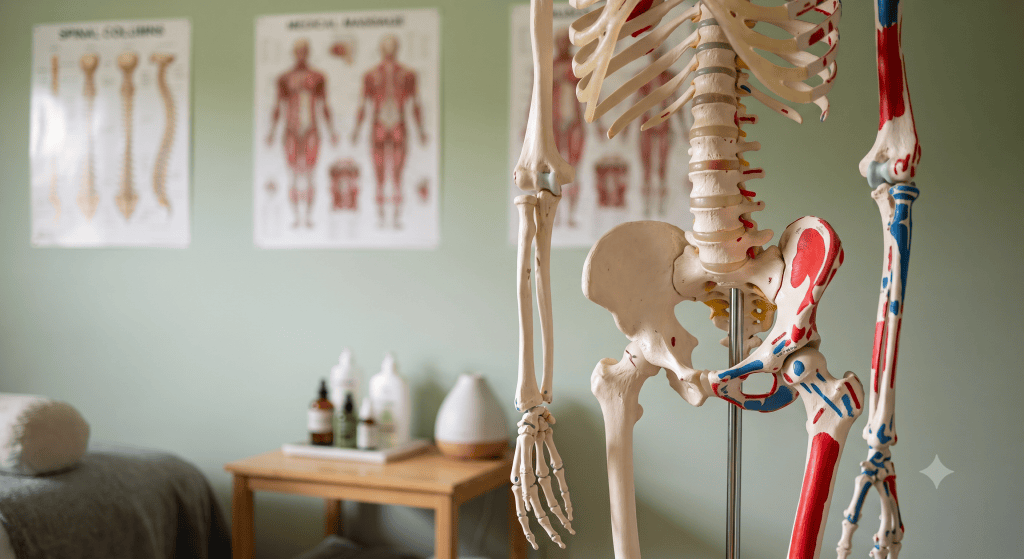
Restore the System by balancing the structure
Targeting the anatomical root cause of pain by correcting structural distortions.
Personalized treatment plans created for your body’s specific individual needs.
Neurosomatic Therapy is a structural-based manual therapy that views the body as an interconnected system. Grounded in anatomy, physiology, and biomechanics, NST examines how imbalances in one area of the body can affect the whole system.
Conditions Treated
- Back Pain
- Breathing Difficulties
- Carpal Tunnel Syndrome
- Disc Herniations
- Frozen Shoulder Syndrome
- Hip Pain
- Leg Length Inequality
- Migrane Headaches
- Neck Pain
- Plantar Fasciitis
- Sciatica
- Scoliosis
- Tennis Elbow
- Thoracic Outlet Syndrome
- TMJ Dyfunction
- and many more!
Ready to address the root cause of your chronic Issues? Let’s get started.
Explore the science behind Neurosomatic Therapy—and discover if my approach is the right fit for you
Every effective treatment plan begins with a precise evaluation. During your initial intake, I review your complete health history and conduct a detailed postural assessment to identify the structural distortions driving your pain. This comprehensive analysis allows me to map out a targeted, personalized approach to address the anatomical root causes of your symptoms.
Manual treatment is where we put your customized plan into action. During these hands-on treatment sessions, I use precise, specialized techniques —including targeted myofascial and trigger point release — to release chronic muscle tension, correct structural imbalances, and relieve pressure on your nervous system. By systematically addressing these underlying structural distortions, I help to promote your nervous system to regulate and your structure to return to a state of balance.
Manual treatment creates the space for healing, but movement ensures it lasts. In this phase, I guide you through specific corrective exercises designed to strengthen and support a more ideal structural alignment.This essential step addresses lingering muscular imbalances and compensation patterns to promote optimal biomechanics.